


How Does Spray Foam Insulation Actually Work?
Spray foam insulation can seem almost too simple from the outside. A crew sprays a liquid material into a wall, ceiling, rim joist, or basement area, it expands, and suddenly the space is insulated. But what is happening, and why does spray foam perform differently from fiberglass batts or blown-in insulation?
The short answer is that spray foam is designed to expand into gaps while providing thermal resistance. Depending on the product and thickness, it can also help control air movement and moisture. That is why it is often used in hard-to-reach or high-risk areas of Ottawa homes.
It Starts as Two Liquid Components
Spray foam begins as two separate liquid materials that are kept apart until the moment of application. Inside the spray equipment, the components are heated and mixed in the correct ratio. The mixed material travels through a heated hose to the spray gun, where it is applied to the surface. Once sprayed, it reacts and expands quickly.
That expansion is what makes spray foam different from many traditional insulation products. It can fill small gaps around framing, pipes, wiring, and irregular surfaces that are difficult to cover with batts.

The Foam Expands, Then Cures
After the material is sprayed, it expands into the cavity or onto the surface. The installer applies it in controlled passes to reach the required depth and avoid applying too much material at one time.
Once cured, the foam becomes a solid insulation layer. The final texture and performance depend on whether the product is open-cell or closed-cell. Installation quality matters enormously here. Surface temperature, substrate condition, chemical ratio, spray thickness, and ventilation all affect the final result. That is why spray foam should be installed by trained, qualified professionals—not treated as a casual DIY product.
Open-Cell and Closed-Cell Work Differently
Open-cell spray foam is lighter and softer. It expands more and generally has a lower R-value per inch than closed-cell foam. It can be useful in certain interior assemblies or areas where there is enough depth to achieve the desired performance.
Closed-cell spray foam is denser and more rigid. It provides a higher R-value per inch and can help with air sealing and moisture resistance. That makes it a common choice for rim joists, basement walls, crawl spaces, and other areas where space is limited or condensation risk is higher.
Neither product is automatically better everywhere. The right choice depends on the location, moisture conditions, desired R-value, and how the full assembly is designed.
Spray Foam Does More Than Slow Heat Loss
All insulation slows heat flow, but spray foam can also help reduce uncontrolled air movement. Air leaks around framing, electrical penetrations, rim joists, and other gaps can allow warmed indoor air to escape during winter and humid air to enter cold building cavities.
When closed-cell spray foam is installed properly, it can create a more continuous layer around many of those gaps. Natural Resources Canada notes that spray foam can provide air sealing and an initial layer of insulation in retrofit applications.
Where Spray Foam Works Best
Spray foam is often most effective in targeted applications rather than as a one-product solution for the entire house.
Rim joists and band boards.
Foundation and basement walls.
Crawl-space walls.
Hard-to-seal framing transitions.
Shallow cavities where higher R-value per inch is needed.
Roofline or cathedral-ceiling assemblies designed specifically for spray foam.
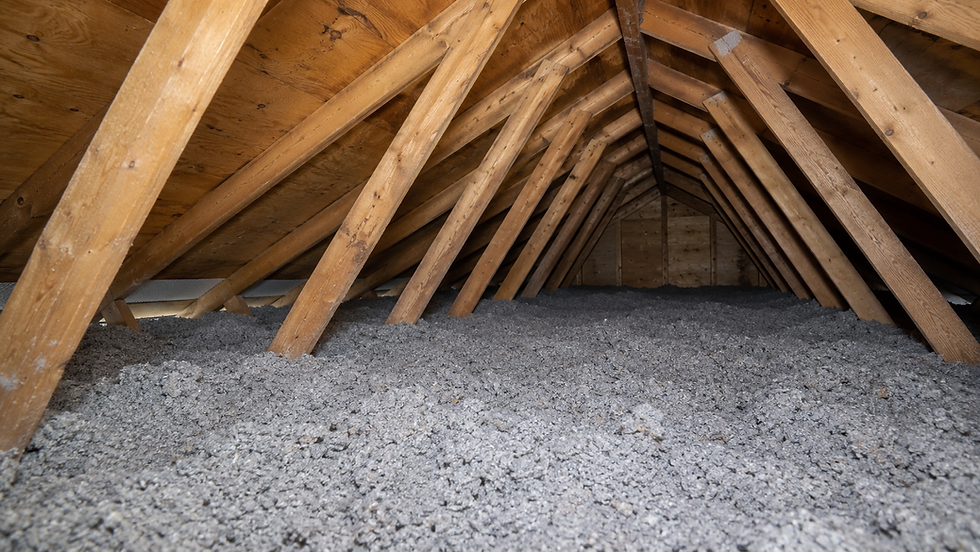
In other areas, a different product may be more cost-effective. For example, an open attic floor may be better suited to air sealing plus blown-in insulation.
Why Preparation Matters
Spray foam cannot solve existing water or structural problems. Before work begins, the installer should look for leaks, wet materials, mold, damaged framing, old wiring concerns, and surface conditions that could interfere with adhesion. Spraying foam over active moisture or a roof leak does not fix the underlying issue.
What Homeowners Should Expect During Installation
Spray foam installation requires planning. During application and curing, workers use specialized protective equipment and active ventilation. Occupants and pets should stay out of the work area and follow the contractor’s project-specific re-entry instructions.
The Bottom Line
Spray foam works by expanding into place, curing into an insulating layer, and—when designed and installed correctly—helping reduce heat loss, air leakage, and moisture risk in certain areas.
It is not a magic solution for every part of the home. But it can be an excellent option where it is matched to the right assembly, installed by trained professionals, and used as part of a broader insulation and air-sealing strategy.
If you are considering spray foam for a basement, rim joist, crawl space, addition, or renovation, contact Spray-Tech Insulation to book a free estimate. We can explain how spray foam would work in your specific space and whether it is the right solution for your Ottawa-area home.


Comments