

_edited.png)
Open-Cell vs Closed-Cell Spray Foam: What’s the Difference?
Updated: Jun 16

If you’re researching spray foam insulation for your home in Ottawa, one of the first decisions you’ll face is choosing between open-cell and closed-cell spray foam. While both improve comfort and energy efficiency, they work very differently — and the right choice depends on where it’s being installed, how much space is available, and whether moisture is part of the picture. Understanding the difference between open-cell and closed-cell spray foam is important before committing to any insulation project.
At a basic level, spray foam is valued because it does two jobs at once. It insulates, which slows heat loss, and it helps air seal, which cuts down on drafts and uncontrolled air leakage. In Ottawa and Eastern Ontario, that combination matters because homes have to deal with long heating seasons, cold winters, humid summers, and frequent freeze-thaw cycles. When air leaks and insulation gaps are left untreated, comfort drops quickly and energy costs climb.
What Is Open-Cell Spray Foam?
Open-cell spray foam is the lighter, softer version. Once cured, it has a texture that is less rigid and more compressible than closed-cell. It expands aggressively when sprayed, which helps it fill cracks, voids, and irregular framing cavities. This makes it useful in areas where maximum expansion is helpful and where you want good coverage without necessarily needing the highest R-value per inch.
Open-cell foam has a lower R-value per inch than closed-cell foam, so it takes more thickness to reach the same thermal performance. In a wide-open cavity, that may not be a problem. In a tight wall or basement assembly, it can matter a lot.
What Is Closed-Cell Spray Foam?
Closed-cell spray foam is denser and much more rigid after it cures. It provides more R-value per inch, which is one of the main reasons it is so popular in basements, rim joists, crawl spaces, and exterior walls where every inch counts. Because it is denser, closed-cell also does a better job resisting moisture movement, and at the proper thickness, it can function as both an air barrier and a vapour barrier in many applications.
That combination is a major advantage in Ottawa homes, especially where insulation is being applied against cold concrete, masonry, or other surfaces that are prone to condensation.

Where Does Open-Cell Spray Foam Make Sense?
Open-cell can be a good option in some interior applications, including certain wall and roof assemblies where moisture is controlled by the rest of the assembly and where there is enough depth to build up the required insulation thickness. Some homeowners also like it for sound control because its softer, more open structure can help reduce airborne noise transfer between rooms.
In a renovation where the main goal is quieting a shared wall and not creating a vapour-resistant layer, open-cell may be a reasonable choice. The key is making sure the assembly is designed correctly.
Where Closed-Cell Spray Foam Is Usually the Better Choice
Closed-cell tends to be the more common recommendation when durability, moisture resistance, and higher thermal performance are the priority. In a basement, the wall is often exposed to cool concrete, higher humidity, and seasonal moisture pressure. Closed-cell foam fits that situation well because it delivers strong thermal performance while reducing the moisture risks that can come with batt insulation installed directly against a cold foundation wall.
In Ontario, common practice targets around R-20 performance for basement walls, along with full-height wall coverage and proper vapour and air barrier. Closed-cell achieves this efficiently in limited space — which is exactly why it is the first choice for most Ottawa basement and rim-joist projects.
Open-Cell vs Closed-Cell: How Cost Compares
Open-cell is less expensive per inch, so on paper it can look attractive. But that lower price does not automatically make it the better value. If a space requires more thickness, a separate vapour barrier strategy, or additional framing to achieve the desired result, the total system cost can rise.
Closed-cell usually costs more up front, but in some situations it simplifies the assembly because you get insulation, air sealing, and moisture resistance from one product. In those cases, the total cost of the finished assembly may be closer than the material price alone suggests.
Ottawa Building Code Context: What R-Values Should You Target?
Ontario Building Code-oriented guidance commonly describes practical targets around R-60 for attic spaces, R-22 for above-grade exterior walls, and R-20 for foundation walls in standard compliance packages. Those numbers are useful reference points for homeowners, even when a full renovation is not required to meet new-home code exactly.
If you are working with a shallow wall cavity or a tricky basement, the higher R-value per inch of closed-cell may be the easiest way to reach those targets. If space is not limited and moisture is well-controlled, open-cell may still be a viable option in specific assemblies.
Choosing the Right Spray Foam for Your Ottawa Home
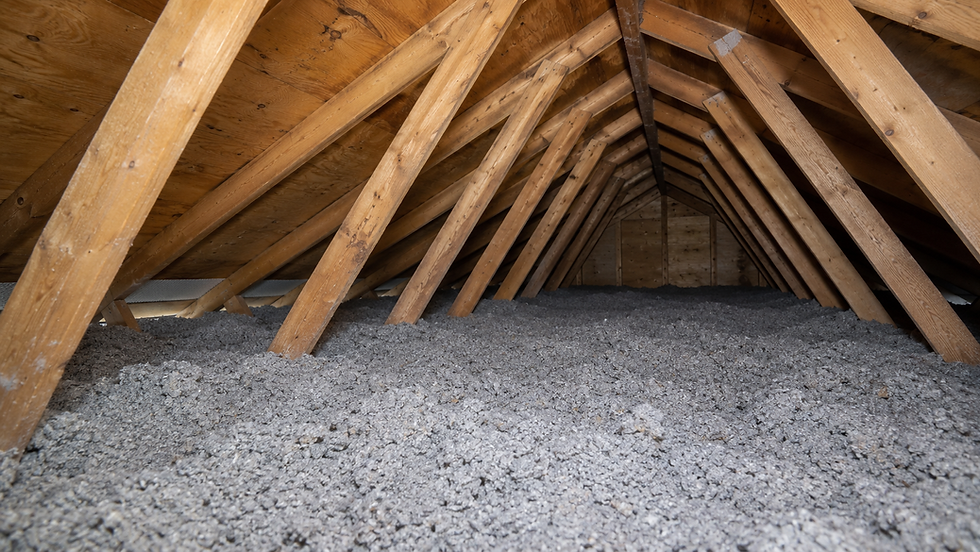
Good insulation choices come from building science, not brand loyalty. In many homes, the smartest solution is a combination approach. A contractor may recommend closed-cell spray foam for the basement walls and rim joists, blown-in insulation in the attic, and batt or mineral wool in a low-risk interior partition. The goal is not to force one material into every part of the house — it’s to use the right material in the right assembly.
For homeowners in Ottawa, Kanata, Orléans, Nepean, Barrhaven, Rockland, and surrounding communities, the decision usually comes down to three questions: How much R-value do you need in the available space? Is moisture a concern? And do you need the product to perform as an air and vapour control layer, or just as insulation? Once those questions are answered, the open-cell versus closed-cell decision becomes much easier.

Frequently Asked Questions
What is the difference between open-cell and closed-cell spray foam?
A: Open-cell spray foam is lighter, less dense, and more vapour-open, making it better suited to interior applications where moisture control is handled by the rest of the assembly. Closed-cell is denser, more rigid, provides higher R-value per inch (approximately R-6 to R-7 vs R-3.5 to R-4), and resists moisture more effectively. The right choice depends on the location and how the full wall or roof assembly is designed.
Can I use open-cell spray foam in a basement?
A: In most Ottawa basements, closed-cell spray foam is the preferred choice. Open-cell foam is more vapour-open and does not provide the moisture resistance needed against cold, below-grade concrete walls. If moisture is a concern — which it usually is in Ottawa basements — closed-cell is the safer recommendation.
Is closed-cell spray foam worth the extra cost?
A: In applications like basement walls, rim joists, and tight exterior wall cavities, yes. Closed-cell delivers more R-value per inch, resists moisture, and can function as a vapour control layer. That combination can simplify the overall assembly compared to using separate insulation, air barrier, and vapour barrier products.
What R-value does spray foam provide?
A: Open-cell spray foam typically achieves around R-3.5 to R-4 per inch. Closed-cell spray foam provides approximately R-6 to R-7 per inch. For reference, Ontario guidance commonly describes attic targets around R-60, exterior walls around R-22, and basement walls around R-20 for modern performance benchmarks.
Which spray foam is better for sound insulation?
A: Open-cell spray foam is generally more effective for sound control because its softer, more open cellular structure absorbs airborne sound energy better than rigid closed-cell foam. If reducing noise between rooms is the primary goal, open-cell may be a reasonable choice for interior wall applications where moisture resistance is less critical.
If you’re comparing options for your basement, attic, renovation, or addition, Spray-Tech Insulation can help you sort out what makes sense for your home. Contact Spray-Tech Insulation to book a free estimate and get a recommendation that fits your house, your budget, and the way Ottawa homes are really built.


Comments